We grind, densify, polish and seal concrete slabs for warehouses, plants, retailers, gyms and offices across Illinois. One crew, one visit, a floor that holds up for decades.
Every slab gets treated for the traffic it actually sees, whether that is forklifts at 5am or bare feet at a gym. Here is what we handle from start to finish.
Mechanical grinding and multi-step polishing that brings out a durable, reflective finish without coatings that peel.
Dust-proof, forklift-rated floors that stand up to racking, pallet jacks and round-the-clock operations.
Bright, low-maintenance floors for stores, gyms and restaurants that need to look sharp seven days a week.
Crack filling, joint repair and surface leveling so the finish sits on a slab that is actually sound.
Integral color, saw-cut patterns and logo work for spaces where the floor is part of the brand.
Scheduled burnishing and re-densifying that keeps an existing polished floor looking freshly finished.
Polished concrete is a mechanical process, not a coating. Here is the sequence we run on every job, adjusted for slab condition and aggregate exposure.
Diamond-tooled grinders remove old coatings, level high spots and open the surface for treatment.
A lithium densifier reacts with the slab to harden the surface from the inside out.
Progressively finer diamond pads bring the floor from matte to a satin or high-gloss sheen.
A stain-resistant guard is applied and burnished in, and the floor is walked and inspected before we sign off.
A look at real projects, from raw warehouse slabs mid-grind to finished floors ready for customers.
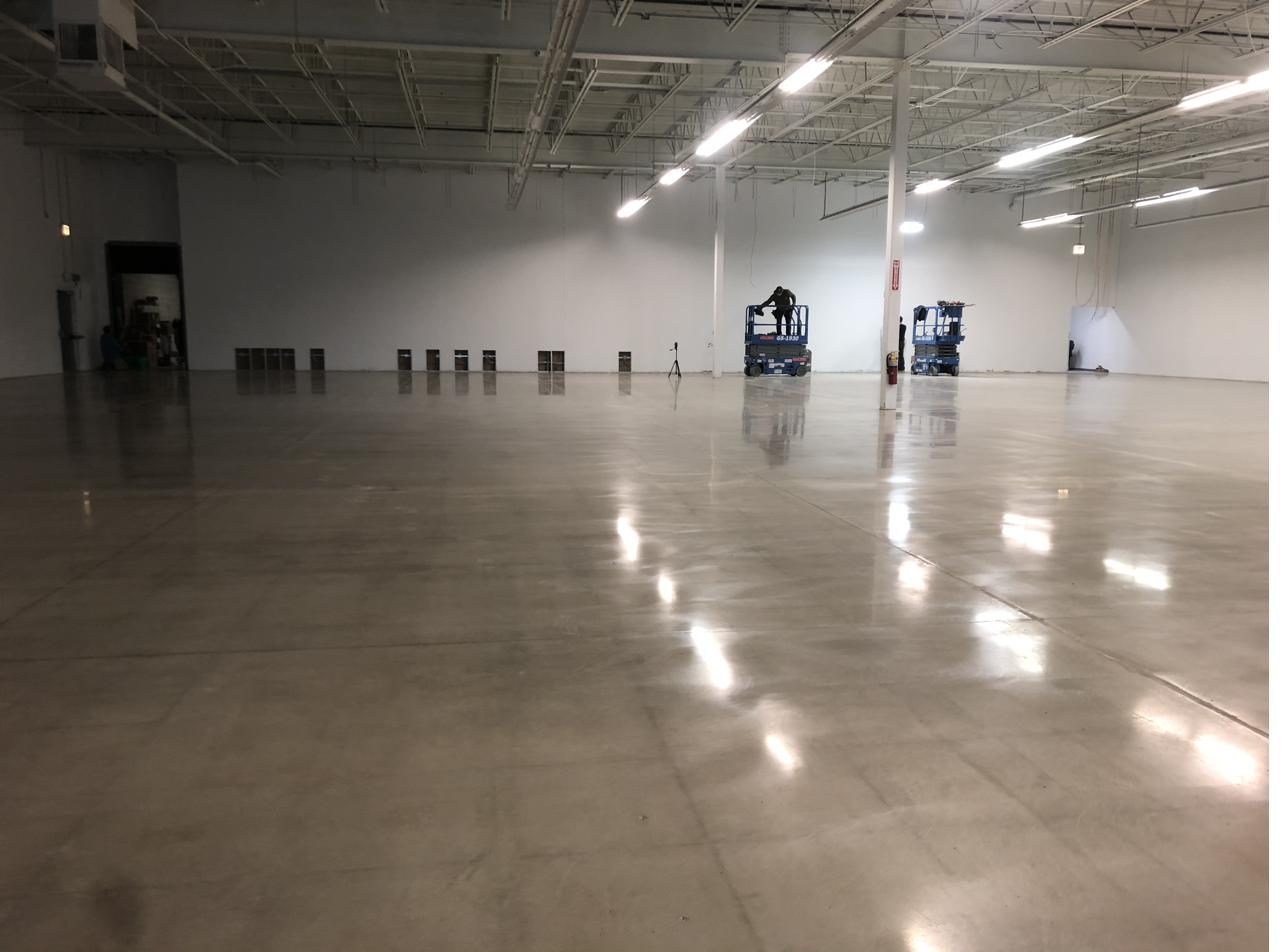
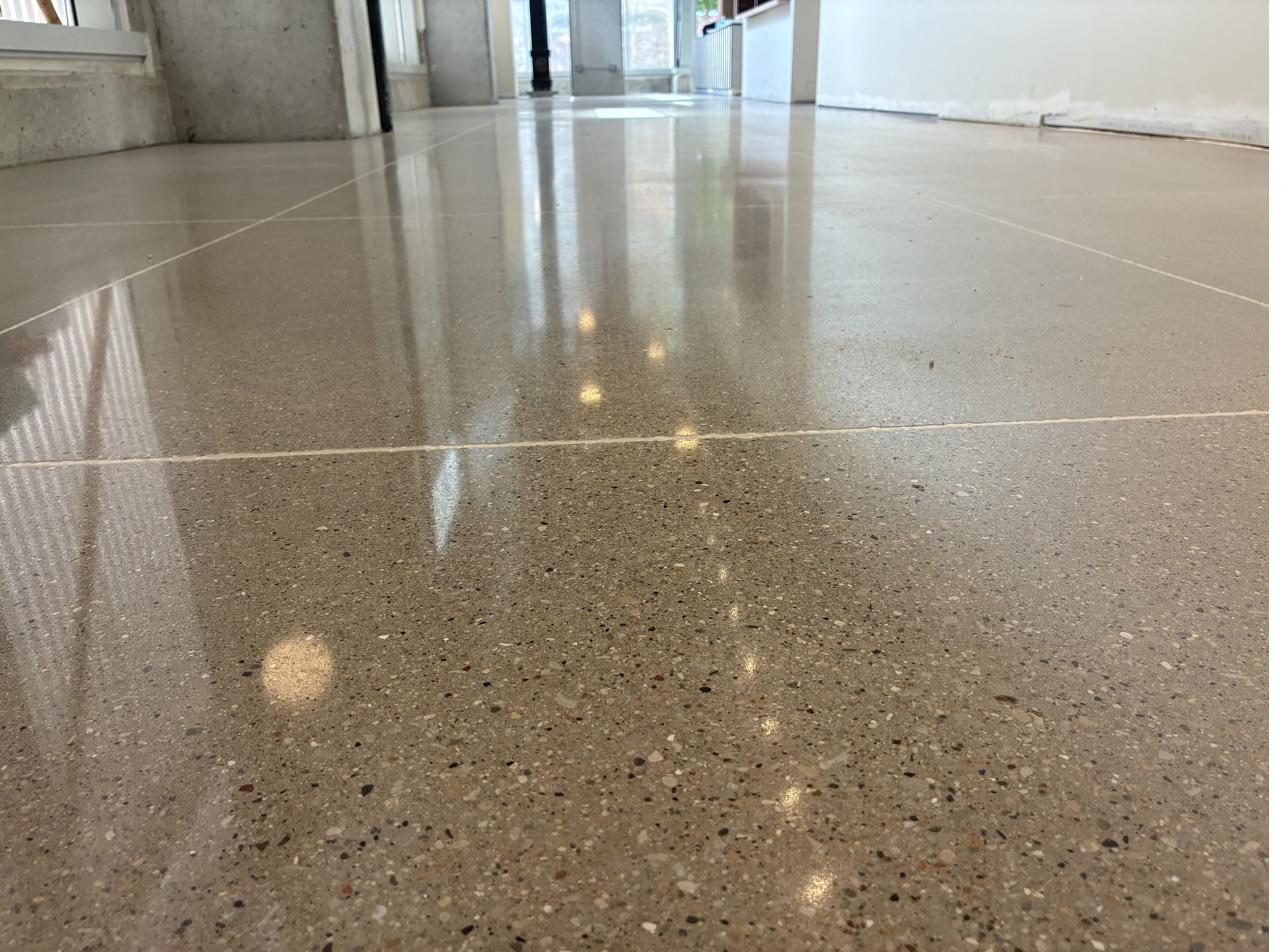
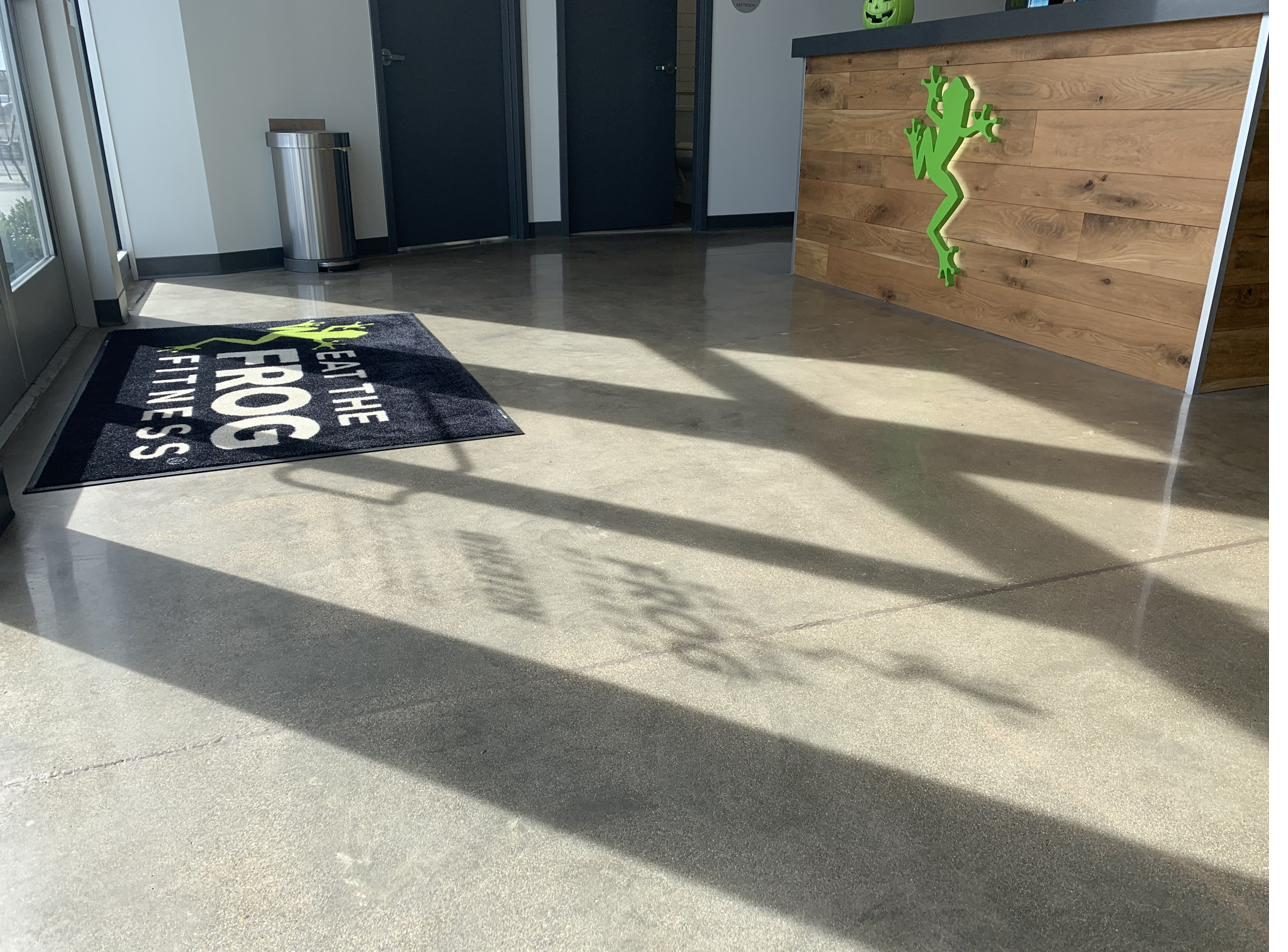
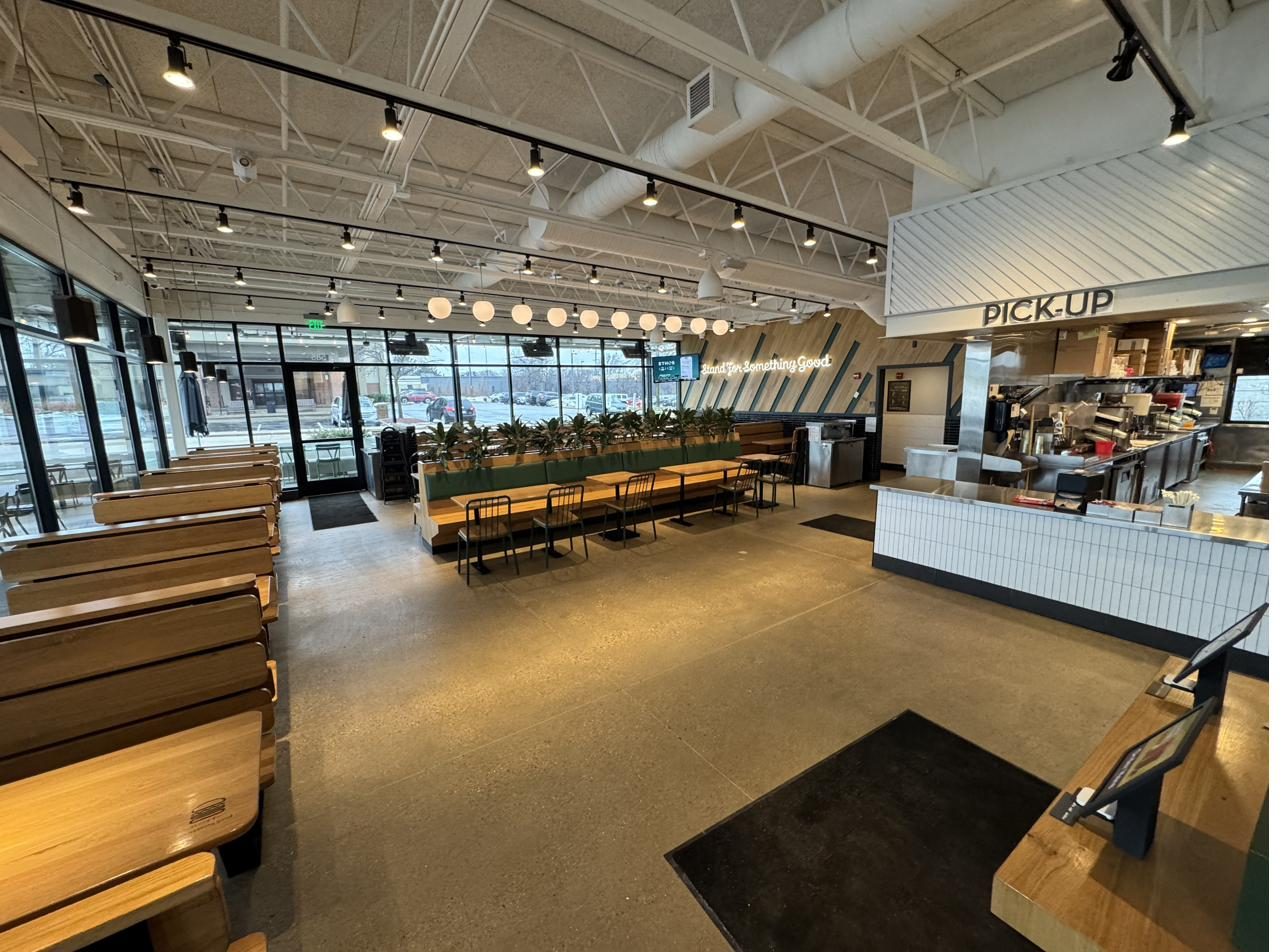
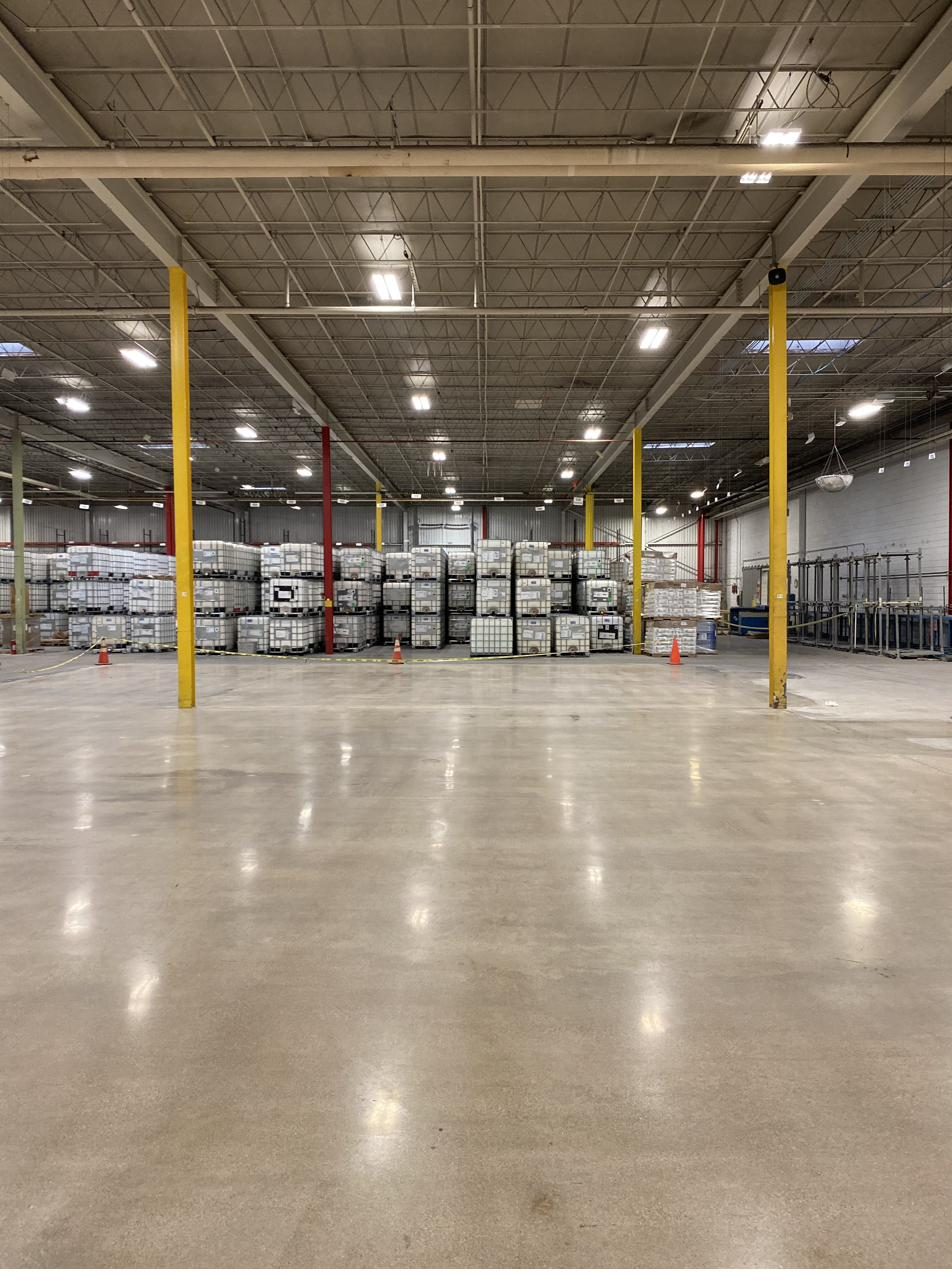
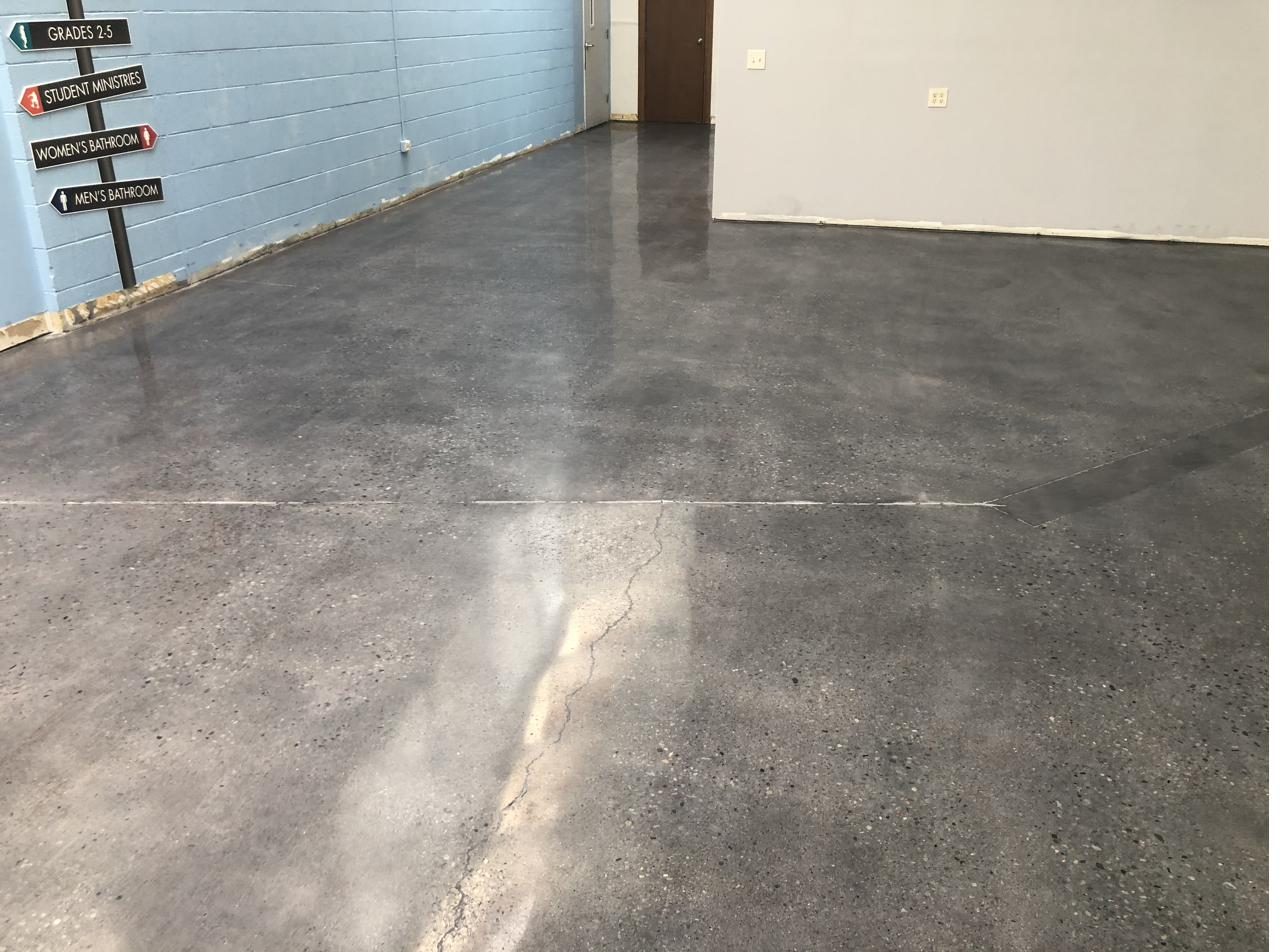
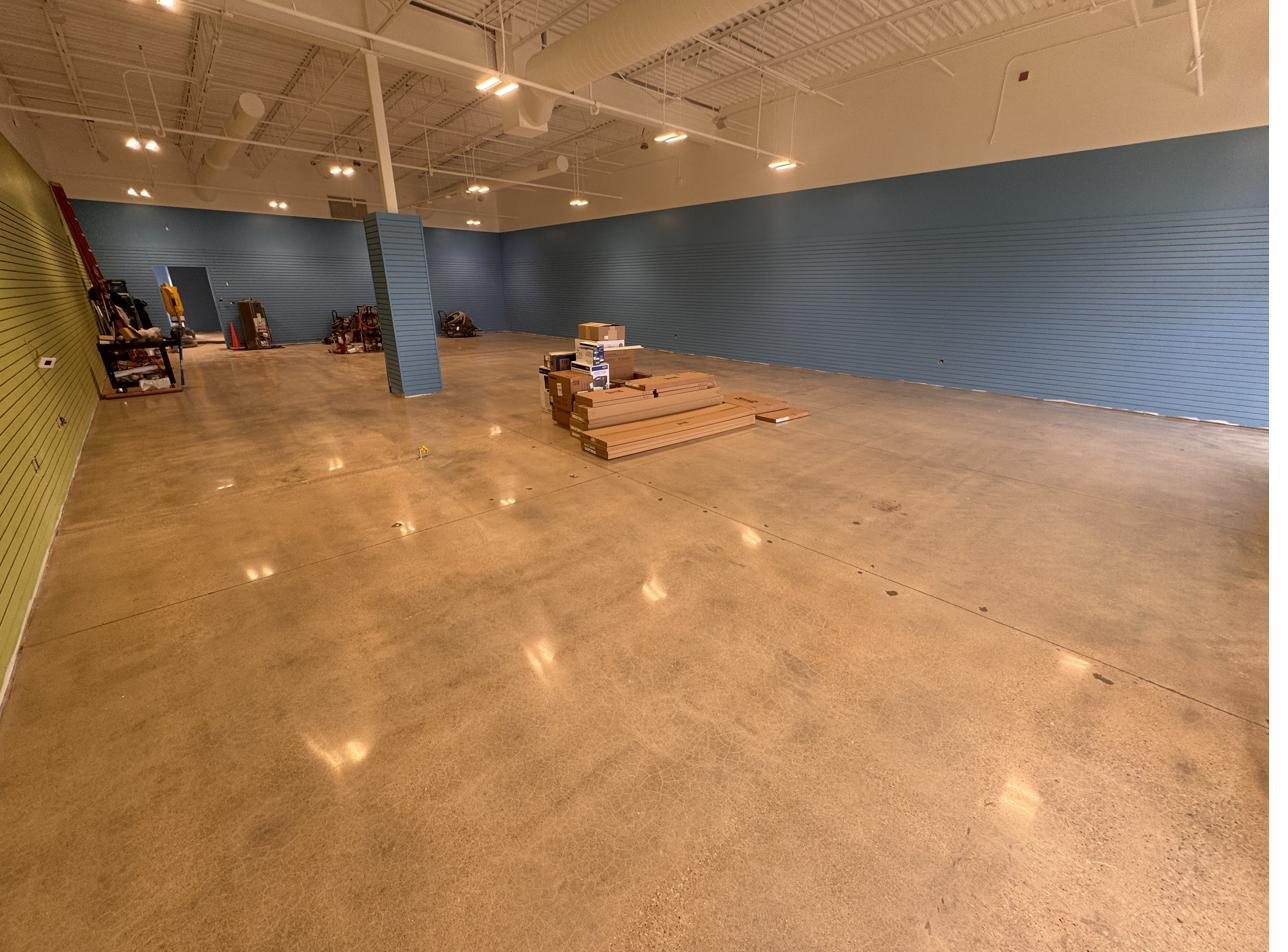
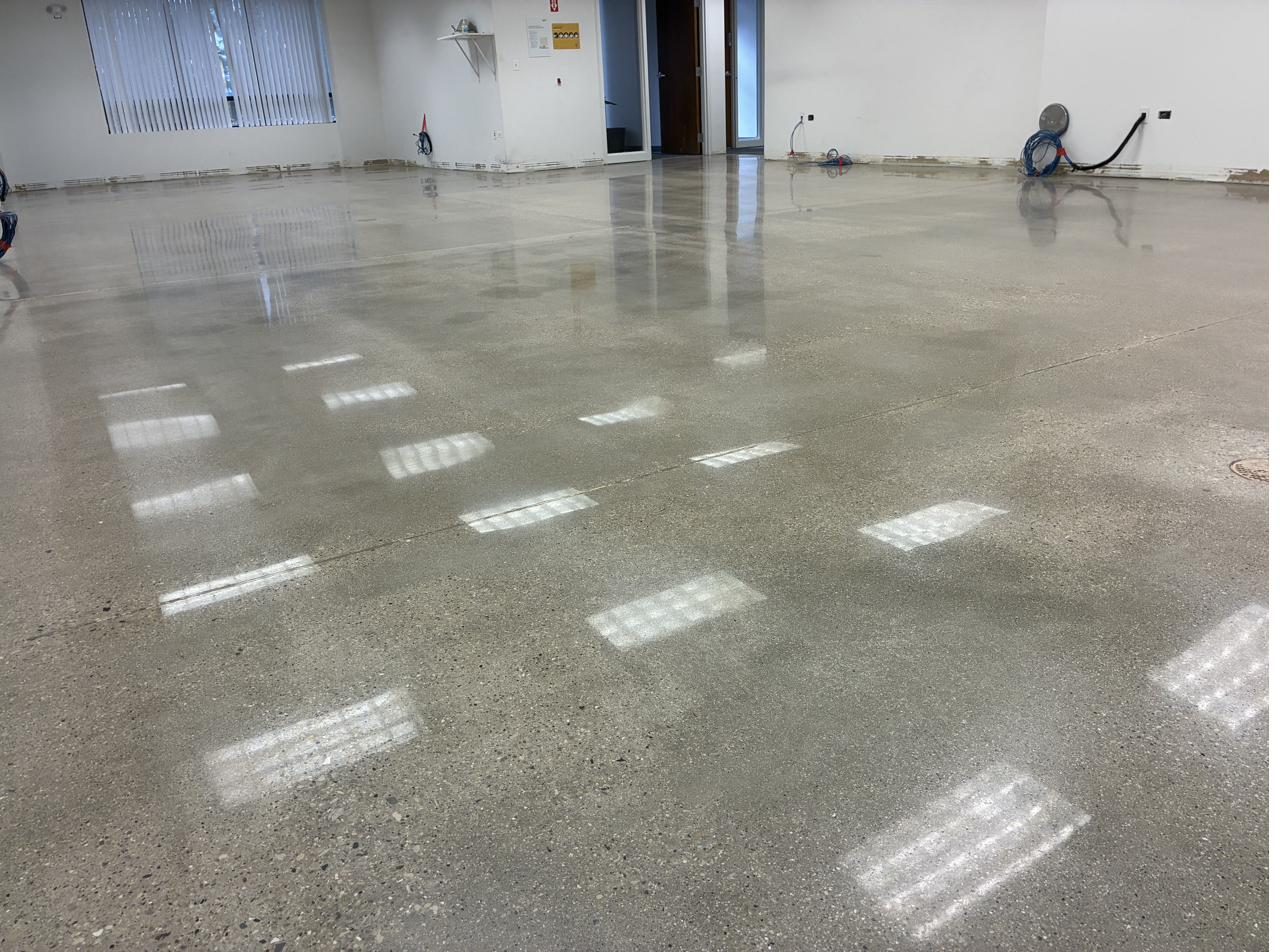
Polishing is a mechanical process done in stages, not a single pass with one tool. Here is what actually happens on a typical slab, from the first inspection to the final buff.
We walk the floor, check the concrete mix and aggregate, and note cracks, joints and old coatings. This tells us how coarse the first grind needs to be and what finish the slab can actually support.
Cracks, spalls and control joints get filled with a semi-rigid or rigid filler before grinding starts, so the repair moves and polishes with the slab instead of standing out.
Metal-bond diamond tooling in the 16 to 30 grit range strips coatings, levels high spots and opens the surface. This pass sets how much aggregate the finished floor will show.
A lithium silicate densifier is spread across the open surface and reacts with the concrete, hardening it from within and closing off small pores before polishing continues.
Resin-bond pads run in sequence, typically 50, 100, 200, 400 and up, each pass removing the scratch pattern left by the one before it and building sheen gradually.
Hand tools and edge grinders finish the areas the main machine cannot reach, along walls, columns and tight corners, so the sheen is even across the whole floor.
A stain-resistant guard is worked into the surface and burnished to final gloss. We walk the floor under raking light to check for haze, holidays or missed spots before handoff.
Based in Arlington Heights and on the road across the state. If your slab is in Illinois, there is a good chance we already know the neighborhood.
Polishing gives a floor its shine. Sealing is what keeps that floor performing under whatever your business puts on it. Here is what a properly sealed slab actually buys you.
An unsealed slab sheds concrete dust with every forklift pass and foot step. Sealing closes the surface so dust stays out of the air, the product and the HVAC system.
Plants and shops deal with oil, hydraulic fluid and cleaning chemicals daily. A sealed floor gives those spills a surface to sit on instead of soaking straight into the slab.
Concrete is porous and pulls moisture up from below. Sealing helps manage vapor transmission, which protects adhesives, equipment and anything stored directly on the floor.
A sealed surface wipes and mops clean instead of absorbing whatever hits it. Most facilities cut sweeping and scrubbing time once the floor stops holding onto grime.
Sealing slows the wear that traffic, racking and equipment cause over the years, which pushes out the timeline before a floor needs to be reground or replaced.
The right sealer and finish level balances shine against slip resistance, which matters in offices with foot traffic and plants where floors get wet or oily.
Polished Concrete Illinois is part of the Northwest Floor network of flooring specialists. For flooring needs outside concrete polishing, visit northwestfloor.com.
Visit Northwest FloorThe questions we hear most from facility managers, GCs and business owners before they book a job.
A properly polished and sealed concrete floor typically lasts 10 to 20 years before it needs to be reground, and it can last even longer with scheduled burnishing and recoating.
Usually not. Most projects are phased in sections and scheduled nights or weekends so the space can stay open during business hours.
Polishing is a mechanical grinding process that creates the shine and smooths the surface. Sealing adds a protective layer that resists stains, chemicals and moisture. Most commercial floors benefit from both.
Cost depends on the slab condition, the level of gloss and the amount of repair work needed. We provide a firm price per square foot after walking the space, not a generic estimate.
Yes. Densified and polished concrete is one of the most durable flooring options for warehouses and plants with forklift traffic and racking loads.
Most sealers and guards can be walked on within a few hours and are fully cured within 24 to 72 hours, depending on the product and site conditions.
Tell us about the space, the square footage and the timeline. We will call back with a real quote, not a range pulled out of thin air.